
Weasels of Alberta: Small, Mighty, and Misunderstood
There are three species of weasel living in Alberta: the Least Weasel, the Short-tailed Weasel, and the Long-tailed Weasel.

The Least Weasel is the smallest of the three. In winter, it becomes completely white, and when its brown summer coat returns, it still keeps its white paws and lighter underbelly.
The Short-tailed Weasel is more than double the size and weight of the Least Weasel. Like its smaller counterpart, it turns white in winter and keeps its white paws and belly in summer — but it also sports a black-tipped tail year-round.
The largest of the three is the Long-tailed Weasel, and as its name suggests, its black-tipped tail is longer — often

nearly half its body length. Like the others, it acquires a white coat in winter. In summer, however, it has more of an off white or pale golden underbelly and matching paws, which helps differentiate it from the other two species on top of its much larger size.
All three of the weasel species are referred to as ermines in their winter white form. The word stoat is more commonly used in Europe, but is also used to describe the Short Tailed Weasel in North America.
Why the Long-tailed Weasel Matters
The Long-tailed Weasel has become a potential at-risk species in Alberta due to several factors, including habitat loss and its slower reproductive rate. It typically has only one litter per season, while the other two species can sometimes have two litters per year.
Trappers with permits are allowed to harvest members of the weasel family, but numbers are regulated. Landowners who have suffered livestock losses may also legally dispatch problem predators, including weasels.
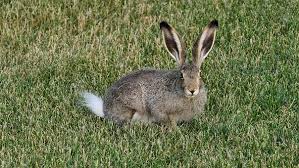
However, weasels play an important role in keeping rodent populations — and sometimes even wild rabbit and hare populations — in check (they can take down prey many times their size). They are usually reclusive and solitary, except when raising young. Because of this, it is often far more beneficial to focus on coexistence rather than removal.
Preventing Livestock Losses (Without Losing Your Weasel Allies)
Most livestock losses (such as poultry or domestic rabbits) occur when enclosures are not secure and natural food sources are scarce.
Here are some simple ways to protect your animals:
- Secure openings tightly. Any gaps should be no larger than ½ inch square. Weasels have slender bodies and are built to follow prey like mice and voles into tiny spaces.
- Use solid floors. Dirt floors can hide rodent burrows and leave small gaps between the ground and the structure — openings a weasel can easily exploit.
- Lock animals up at night. Mustelids and other predators (raccoons, skunks, coyotes, etc.) are most active after dark.
- Remove attractants. Stray eggs, carcasses, offal from butchering, meat scraps, and even kibble left out for cats and dogs can draw in predators of all kinds. These delectables can also attract the rodents which in turn will draw in predators like weasels so removing both food sources will go towards keeping predators away from your livestock
- Be present. The more you check on your animals and vary routines, the less likely predators are to linger. Most are non-confrontational and will move toward areas with less traffic.
Rather than eliminating predators, it’s often better to discourage them from hunting near your livestock while allowing them to remain in areas where they can help control unwanted vermin. When one predator disappears, another often moves in — and the cycle begins again.
Establishing strong fence perimeters and using patrolling livestock guardians (such as donkeys, dogs, and other deterrents) can help direct predators away from your flocks and toward less problematic zones.
If a Weasel Has Already Targeted Your Coop…
If a weasel has already gotten a taste for your chickens or rabbits, all is not lost.
You can set live traps, and if you choose to release the animal, you can use livestock marker paint to identify it before relocation. (Just make sure you take it far enough away — many people underestimate how far predators roam.)
Also, try not to release an animal directly into another predator’s established territory.
If you catch a weasel in your coop again within one week to two months (about how long marker paint tends to last), and it matches your marked colour, only then has it proven itself as a repeat offender. At that point, it may be difficult to break it of the habit of returning to an easy buffet.
That said, if you follow a few basic protocols — including the ones outlined above — you should rarely, if ever, have to make that choice.
Most of us should be thankful to have a few weasel friends around to help clean up the neighbourhood.
You must be logged in to post a comment.